Every job below is one we do ourselves across Plano.
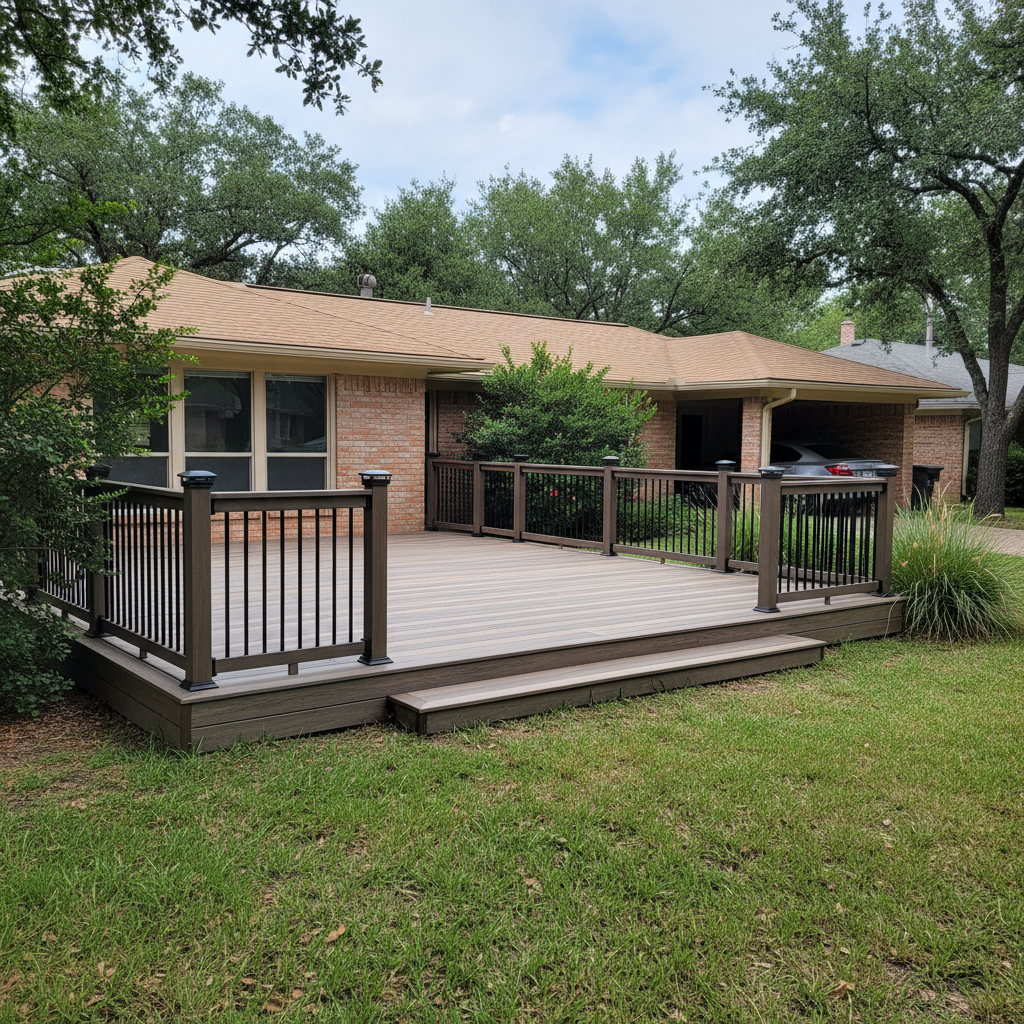
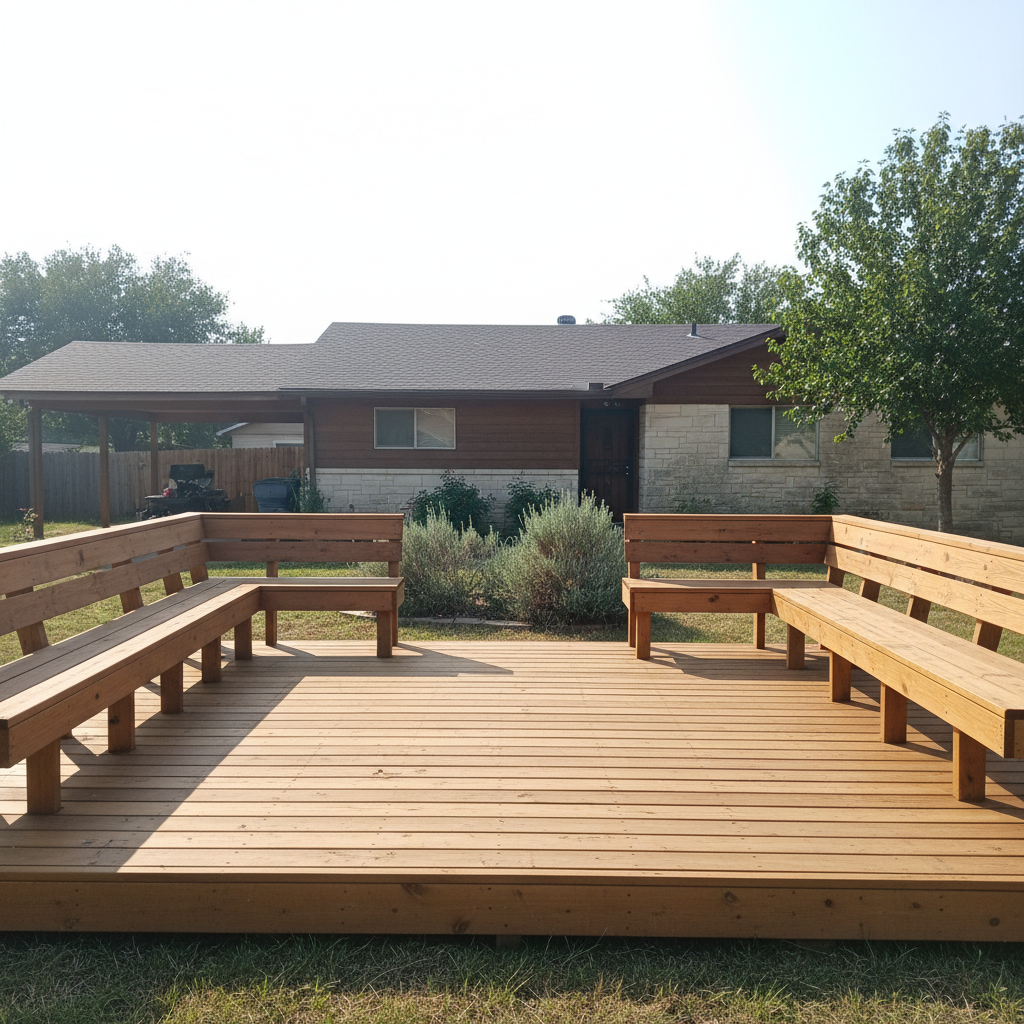
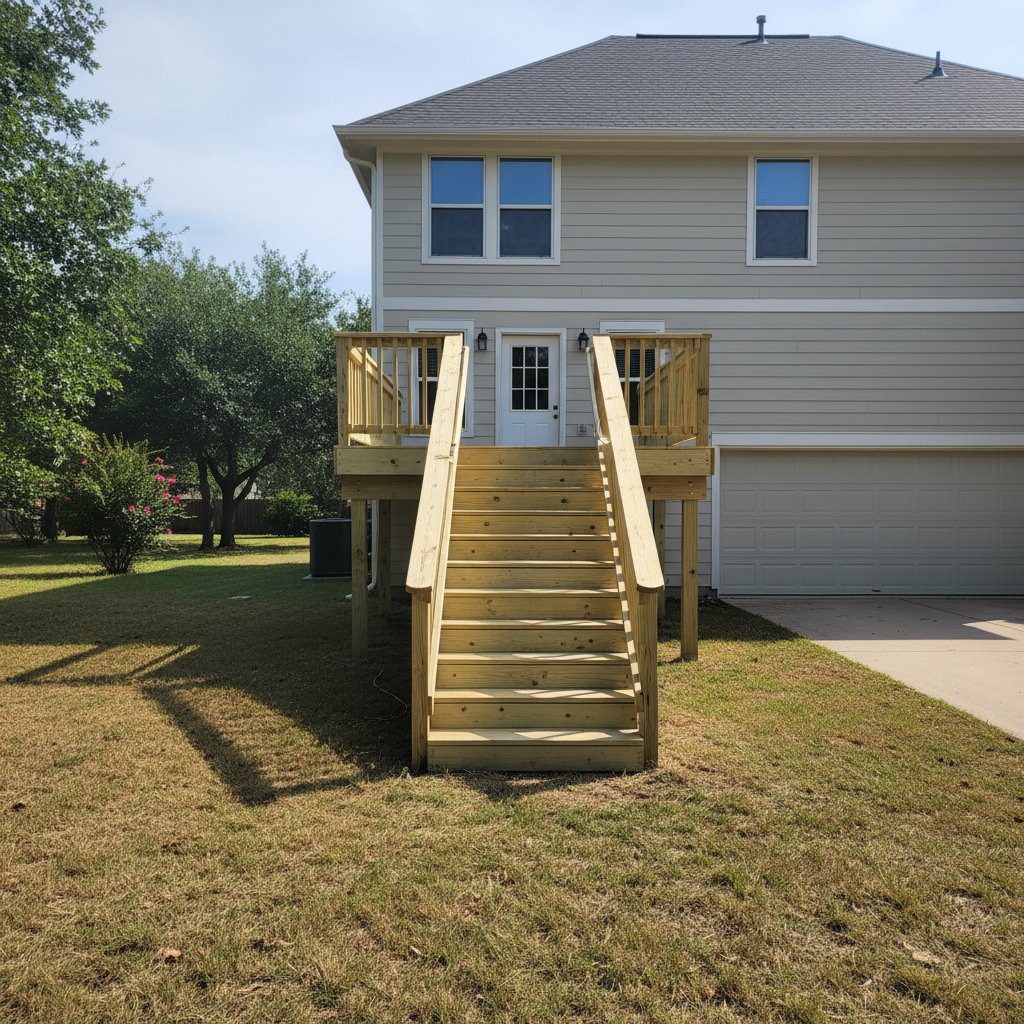
We build decks from pressure-treated pine, cedar, or composite boards, set on concrete footings poured below the frost line so the structure doesn't shift with the clay soil underneath. Joists go in at 16 inches on center, and every ledger board gets flashed before it touches the house. Most standard decks take one to two weeks depending on size and railing style.
Soft spots, bouncy boards, and loose railings usually mean the joists or ledger board have started to rot where moisture sits against them. We pull the damaged boards, check the framing underneath, and replace what's compromised instead of screwing a new board over a bad one. Sometimes the fix is one board, sometimes it's the whole ledger connection.
Texas sun fades and dries out wood fast, and an unsealed deck starts graying and splitting within a couple of summers. We pressure wash first, let the wood dry for a day or two, then apply a stain and sealer rated for UV and moisture. This isn't a once-and-done job, plan on resealing every two to three years to keep the wood from cracking.
Multi-level decks, built-in benches, pergola sections, and curved stair layouts all change how the framing has to be engineered underneath. We draw up the layout first so you can see board direction, railing style, and stair placement before any lumber gets cut. If the yard slopes toward the house, drainage gets worked into the design instead of becoming a problem later.
Composite boards don't rot or splinter, which matters if you've already replaced wood decking once. They expand and contract more than wood with heat, so spacing and fastening have to account for a 100-degree summer day versus a 30-degree winter morning. We install brands like Trex and TimberTech with hidden fastener systems so there's no screw heads showing on the surface.
Wobbly railings are almost always a sign the posts weren't bolted through the rim joist, just screwed to the face of it. We through-bolt every post and space balusters no more than 4 inches apart, which is code here and also just safer with kids or dogs around. Cable rail, wood baluster, and composite railing systems are all options depending on the look you want.
If the framing underneath is still solid but the boards are cupping, splintering, or just worn out, resurfacing is cheaper than tearing the whole deck down. We pull the old decking, check every joist for soft spots while it's exposed, and lay new boards over the existing structure. It's a good option for a deck under 15 years old.
A lot of our deck clients add a pergola or a covered section once they realize the deck gets too hot to use by July. We frame these to tie into the existing deck structure, or set them on their own footings if the deck can't carry the extra load. Shade cloth, louvered covers, and solid roof panels are all things we can build into it.
Old decks with rotted framing or failing footings sometimes aren't worth saving, and repairing around bad framing just means redoing the work later. We tear out the old structure, haul off the lumber, and check the ledger area on the house for water damage before anything new goes up. This usually adds a day to the project timeline, not much more.
Split-level yards and houses with a walkout basement usually need a deck that steps down in stages instead of one flat platform. Each level needs its own footings and stair connections, and the framing has to carry a different load path than a single-level deck. We've built these with landings, switchback stairs, and lower patio connections underneath.
Four steps, and no surprises in any of them.
You tell us what you want doing, we look at what is actually there, and we ask the awkward questions early.
In writing, itemised, free. If something might add cost later we flag it now rather than at the end.
Same crew throughout. We cover your floors, keep the dust down and tidy up before we leave each day.
You point out anything you are not happy with and we fix it before the invoice, not after.
Deck work we take on across Plano and the surrounding area.
Questions that come up once a deck project actually starts.
Describe the problem and we will tell you what it probably is. No obligation.